
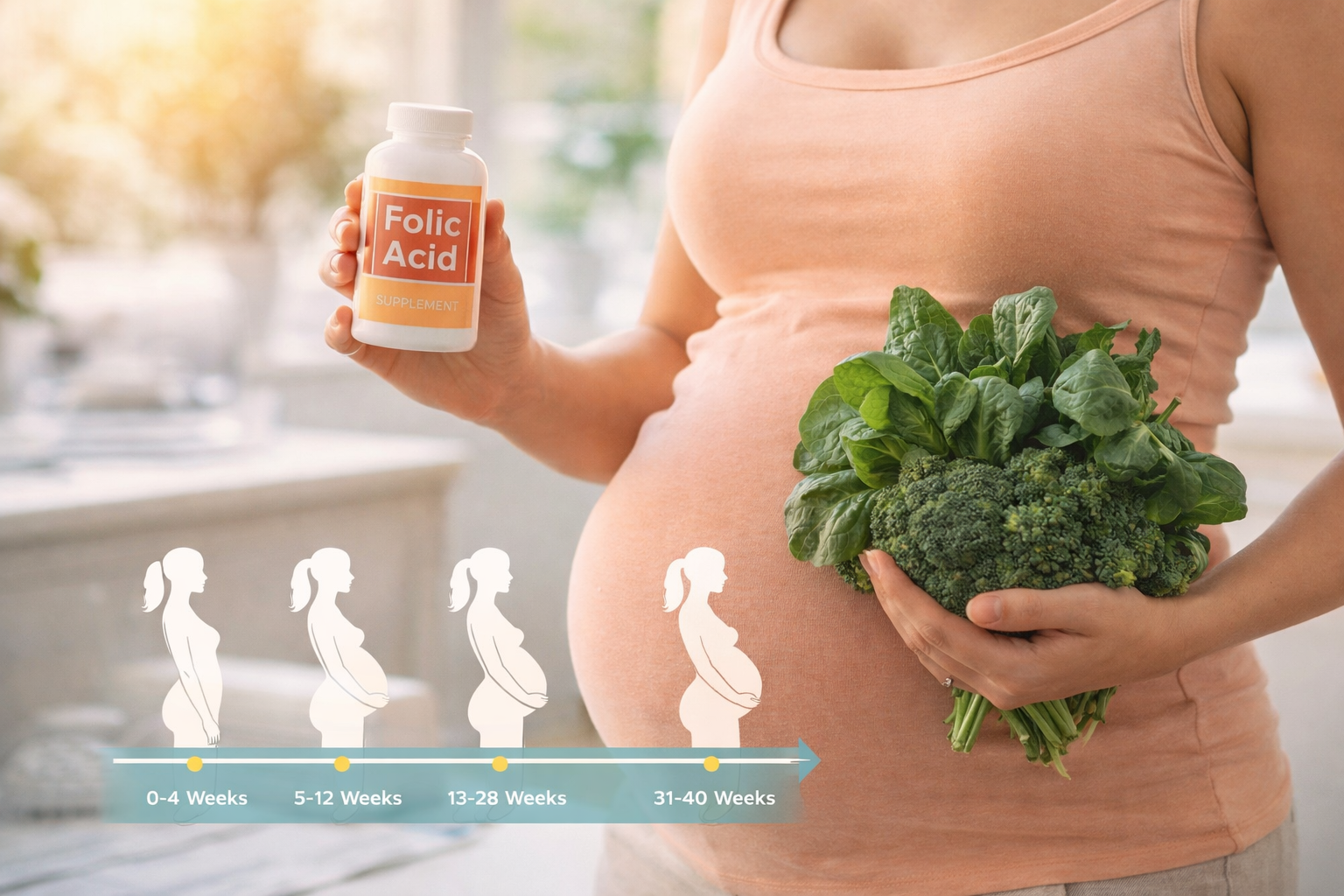
Folic acid is one of the most critical nutrients for a healthy pregnancy, yet many women don't realize timing is everything. Taking it too late may mean missing the crucial window when your baby's brain and spinal cord are forming—often before you even know you're pregnant.webmd+1[youtube]
Birth defects can occur within the first 3-4 weeks of pregnancy, making it essential to have adequate folate levels in your system from the very beginning. The good news? Taking folic acid at the right time can reduce the risk of serious birth defects by up to 70% and even cut your chances of early delivery by 50% or more.[youtube]atlobgyn+1
Here's everything you need to know about when to start, how long to continue, and the optimal dosage for each stage.
Before Pregnancy: The Critical Pre-Conception Period
When to Start: 3 Months Before Trying to Conceive
The ideal time to begin folic acid supplementation is at least 1 month before conception—but 2-3 months is even better.tommys+3
Why start so early?
It takes time for folic acid to build up to protective levels in your body. By starting 3 months before conception, you ensure adequate folate stores are ready when your baby needs them most.heloa+1
The CDC recommendation: All women of childbearing age should take folic acid every day, regardless of whether they're actively trying to conceive. Since nearly half of all pregnancies are unplanned, this provides a safety net.www2.hse+1
Pre-Conception Dosage
Standard dose: 400 micrograms (mcg) dailynhs+3
This applies to most women planning pregnancy without specific risk factors.
The Research-Backed Benefits of Starting Early
One groundbreaking study found that women who took folic acid for at least a year before getting pregnant reduced their chances of early delivery by 50% or more.atlobgyn+1
Starting early also helps:
Prepare your body for the increased demands of pregnancy
Build up folate reserves
Reduce risk of preeclampsia[atlobgyn]
Support your own cardiovascular health[atlobgyn]
During Early Pregnancy: The Most Critical Window
First Trimester (Weeks 1-12): Absolutely Essential
This is the most critical period for folic acid supplementation.nhs+2
Why it's so important:
The neural tube—which becomes your baby's brain and spinal cord—develops incredibly early, forming and closing by about 28 days after conception (around 6 weeks of pregnancy). This often happens before many women even realize they're pregnant.[webmd][youtube]
What folic acid does during this time:
Helps the neural tube close properly[youtube]
Supports rapid cell division and DNA synthesis
Enables proper brain and spinal cord formation
Prevents neural tube defects like spina bifida and anencephaly[youtube][atlobgyn]
First Trimester Dosage
Standard dose: 400 micrograms (mcg) dailynhs+2
Continue taking folic acid throughout the entire first 12 weeks of pregnancy.tommys+2
During Mid to Late Pregnancy: Continued Benefits
Second and Third Trimesters (Weeks 13-40)
Recommended dose: 600 micrograms (mcg) dailymolecularit+2[youtube]
While the most critical period for neural tube development has passed, folic acid remains important throughout pregnancy because it:
Helps make blood cells[nhs]
Prevents anemia in both mother and baby
Supports the rapid growth and cell division your baby experiences
Aids in placental development[heloa]
Supports maternal blood health[heloa]
Your doctor or midwife may recommend continuing folic acid supplementation throughout your entire pregnancy, especially if you:
Are anemic or at risk of anemianhs+1
Have certain medical conditions
Have dietary restrictions
After Pregnancy: Breastfeeding Period
Postpartum Dosage
Recommended dose: 500 micrograms (mcg) daily while breastfeedingmolecularit+2
Folic acid continues to be important after delivery because it:
Supports milk production[molecularit]
Helps replenish maternal folate stores depleted during pregnancy
Supports your postpartum recovery
Provides folate to your baby through breast milk
Higher Doses: Who Needs More?
High-Risk Situations Requiring 4-5mg Daily
Your doctor will recommend a much higher dose of 5 milligrams (5,000 mcg) once daily if you have:[nhs]
Previous pregnancy with neural tube defect:
You or your partner had a neural tube defect
You previously had a baby with spina bifida or anencephaly
Medical conditions affecting folate absorption:
Celiac disease
Diabetes
Epilepsy (especially if taking certain anti-seizure medications)
Sickle cell disease
Obesity (BMI over 30)
Medications that interfere with folic acid:
Anti-epileptic drugs
Methotrexate
Sulfasalazine
Certain antibiotics
Genetic factors:
MTHFR gene mutation (affects folate metabolism)
Previous miscarriages[youtube]
Important: High-dose folic acid requires medical supervision. Never take more than 1,000 mcg (1 mg) daily without consulting your healthcare provider.[youtube]
What Birth Defects Does Folic Acid Prevent?
Neural Tube Defects
Spina Bifida:
The neural tube fails to close at the bottom, leaving parts of the spinal cord exposed. Children with spina bifida often experience:[youtube]
Leg paralysis
Developmental delays
Nervous system problems
Require surgery and lifelong medical care[youtube]
Anencephaly:
The neural tube fails to close at the top, preventing proper brain and skull development. This condition is incompatible with life—babies typically die before birth or shortly after.[youtube]
Risk reduction: Adequate folic acid can reduce the risk of neural tube defects by up to 70%.[atlobgyn]
Other Birth Defects Potentially Prevented
Research suggests folic acid may also reduce risk of:[atlobgyn][youtube]
Cleft lip and palate[atlobgyn]
Congenital heart defects (such as atrial septal defect)[youtube]
Premature birth[atlobgyn]
Low birth weight[atlobgyn]
Miscarriage[atlobgyn]
Poor fetal growth[atlobgyn]
Folic Acid vs. Folate: What's the Difference?
Folate is the natural form of vitamin B9 found in foods.[webmd][youtube]
Folic acid is the synthetic (man-made) form added to supplements and fortified foods.[webmd][youtube]
Why supplements matter:
Your body does not absorb folate from food as easily as synthetic folic acid. That's why experts recommend taking a daily supplement in addition to eating folate-rich foods.[youtube]
Food sources of folate:
Dark leafy greens (spinach, kale)
Citrus fruits
Beans and legumes
Fortified cereals and breads
Avocados
Broccoli
Brussels sprouts
While these foods are nutritious, they alone cannot provide the 400-600 mcg needed daily during pregnancy.[molecularit]
Practical 30-Day Action Plan
Week 1: Start Your Supplement
Choose a prenatal vitamin with 400 mcg folic acid or a standalone folic acid supplement
Tie it to a daily routine (breakfast, bedtime) to build the habit[heloa]
Set a daily phone reminder
Week 2: Optimize Absorption
Review all medications with your doctor or pharmacist[heloa]
Add one folate-rich food serving per day
Ensure you're taking the supplement with food if it causes nausea
Week 3: Troubleshoot
If experiencing side effects, try taking at a different time of day[heloa]
Consider switching formulations if needed
Ensure you're staying hydrated
Week 4: Confirm Your Plan
Schedule a preconception appointment with your healthcare provider[heloa]
Discuss whether you need higher dosing based on your medical history
Confirm your prenatal vitamin contains all necessary nutrients (B12, iodine, iron, vitamin D, choline)[heloa]
Common Questions Answered
What if I just found out I'm pregnant and haven't been taking folic acid?
Start immediately. While it's ideal to begin before conception, starting as soon as you discover you're pregnant still provides important benefits. Continue through the first 12 weeks minimum.tommys+1
Can I take too much folic acid?
Taking the recommended 400-600 mcg is safe. However, do not exceed 1,000 mcg (1 mg) daily without medical supervision. Very high doses can mask vitamin B12 deficiency symptoms.[youtube]
Should I take folic acid even if I'm not planning pregnancy?
Yes, if you're of childbearing age. Since nearly half of pregnancies are unplanned and neural tube development occurs so early, the CDC recommends all women capable of becoming pregnant take 400 mcg daily.www2.hse+1
Is the folic acid in my prenatal vitamin enough?
Most prenatal vitamins contain 400-800 mcg of folic acid, which is sufficient for most women. However, bring your prenatal vitamin to your first OB appointment to ensure it has the recommended amounts.fertilitycenter+1
Can I stop taking folic acid after 12 weeks?
You can, but many doctors recommend continuing throughout pregnancy for blood health and anemia prevention. Discuss with your healthcare provider.nhs+1
The optimal folic acid timeline:
Start 3 months before trying to conceive (400 mcg daily)tommys+2
Continue through the first 12 weeks of pregnancy (400 mcg daily)nhs+1
Increase during second and third trimesters (600 mcg daily)webmd+1
Maintain while breastfeeding (500 mcg daily)molecularit+1
The science is clear: Taking folic acid before and during pregnancy is one of the most effective ways to prevent serious birth defects and support a healthy pregnancy.webmd+1[youtube]
Small steps like taking a daily supplement can have an enormous impact on your baby's lifelong health. Start today—your future baby's brain and spinal cord will thank you.[heloa]
-(2).png)
Comments 0
No comments yet
Be the first to share your thoughts!
Leave a Comment